In the world of electrical power distribution, the transformer is a critical asset. Its longevity and efficiency depend heavily on the integrity of its components, particularly the sealing systems that prevent oil leaks and contamination. For decades, industry experts have relied on a specific composite material to meet the rigorous demands of transformer sealing: the Cork Rubber Sheet. This material uniquely combines the compressibility of cork with the resilience of rubber, creating a gasketing solution that adapts to the thermal expansion and contraction inherent in transformer operation.
As a specialist with 20 years of experience in sealing materials, I have witnessed firsthand the evolution of gasketing technology. However, the fundamental role of the Cork Rubber Sheet in transformer applications remains unparalleled. It provides a reliable barrier against mineral oils, withstands high voltages, and maintains a tight seal over decades of service. At Ningbo Kaxite Sealing Materials Co., Ltd., we have dedicated our manufacturing processes to perfecting this blend, ensuring that every sheet we produce meets the stringent standards of the energy sector. This article delves into the specific uses, technical parameters, and reasons why this material is the industry standard for transformer sealing.
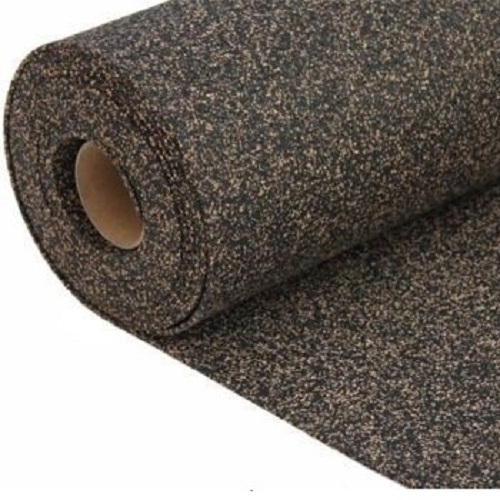
Table of Contents
- What Makes Cork Rubber Sheet Ideal for Transformer Environments?
- How Does Cork Rubber Sheet Perform Under High Voltage and Oil Exposure?
- Why Choose Cork Rubber Sheet Over Other Gasketing Materials?
- Technical Specifications of Our Cork Rubber Sheet
- Conclusion: Securing Your Transformer with Premium Sealing
- Frequently Asked Questions (FAQ)
What Makes Cork Rubber Sheet Ideal for Transformer Environments?
Transformers are not static pieces of equipment; they are dynamic systems that generate heat, vibrate, and contain aggressive insulating oils. A sealing material must therefore be multifunctional. The Cork Rubber Sheet excels in this environment due to its unique hybrid composition. It is not merely a rubber sheet nor a cork board; it is an engineered composite where cork granules are bound within a rubber matrix. This structure gives it properties that are perfectly aligned with the demands of transformer sealing.
First and foremost is the issue of thermal expansion. Transformer cores and tanks heat up during operation and cool down during idle periods. This thermal cycling causes metal flanges to expand and contract. A rigid gasket would fail under this stress, but the Cork Rubber Sheet possesses exceptional compressibility and recovery, thanks to the cork content. It acts as a shock absorber, maintaining constant pressure on the flange surfaces.
Secondly, the seal must be impervious to the transformer oil, typically a highly refined mineral oil. The rubber matrix in our Cork Rubber Sheet is specifically formulated to resist swelling, softening, or cracking when in constant contact with these oils. We at our factory in Ningbo Kaxite Sealing Materials Co., Ltd. ensure that the rubber compound meets ASTM oil resistance standards, guaranteeing that the seal’s dimensional stability remains intact for years.
Key properties that make it ideal include:
- Oil Resistance: Minimal volume swell when immersed in transformer oil (ASTM No.1, No.2, No.3).
- Compressibility: Typically ranging from 20 to 40 at specific pressures, allowing it to fill surface imperfections on cast iron or steel flanges.
- Recovery: High recovery rate ensures the gasket follows flange separation during thermal cycling.
- Dielectric Strength: It acts as an electrical insulator, preventing current leakage between the tank and the cover.
- Conformability: The cork granules allow the sheet to conform to wavy or scratched flange surfaces without requiring extremely high bolt torque.
Furthermore, the application of Cork Rubber Sheet extends beyond just the main tank cover. It is used in bushing mounting plates, tap changer covers, and inspection hatches. In every instance, its role is the same: to create a static seal that prevents the escape of dielectric fluid and the ingress of moisture. Moisture is a transformer's enemy, reducing the dielectric strength of the oil and leading to catastrophic failure. The dense, closed-cell structure of our material provides an effective moisture barrier. By choosing a high-quality Cork Rubber Sheet from a reputable manufacturer like Ningbo Kaxite Sealing Materials Co., Ltd., utilities and maintenance teams can drastically reduce the risk of unplanned downtime.
How Does Cork Rubber Sheet Perform Under High Voltage and Oil Exposure?
The operational environment inside a transformer is harsh. It involves continuous immersion in hot oil and exposure to electromagnetic fields. To understand how the Cork Rubber Sheet performs, we must look at its chemical and physical resilience. The material does not simply sit inside the transformer; it is an active component that must retain its properties despite aggressive chemical attack and electrical stress.
When exposed to high voltage, the concern is not arcing through the gasket, but rather the tracking of current along the surface. The Cork Rubber Sheet acts as a dielectric barrier. The rubber phase provides high electrical resistivity, while the cork acts as a filler that does not create a conductive path. This combination ensures that the gasket does not become a weak point in the transformer's insulation system. In our testing at the factory, we routinely verify the dielectric strength to ensure it exceeds the maximum operating voltage of the application.
Regarding oil exposure, the performance is measured by long-term immersion tests. Transformer oil contains aromatic hydrocarbons that can attack standard rubber compounds, causing them to dissolve or swell excessively. Our Cork Rubber Sheet is manufactured using Nitrile Butadiene Rubber (NBR) as the binder, which is renowned for its resistance to non-polar solvents like mineral oils. The cork component, being naturally absorbent, is treated during manufacturing to prevent capillary action that could wick oil through the sheet.
Here is how the material performs under specific conditions:
- Volume Swell: After 70 hours at 100°C in ASTM No. 3 oil, the swell is typically limited to less than 20. This ensures the gasket does not extrude out of the flange.
- Compression Set: Even after prolonged compression at elevated temperatures, the material retains a significant percentage of its original thickness, preventing loss of bolt torque.
- Flexibility: It remains flexible even at low temperatures, ensuring the seal holds during cold starts in winter.
- Aging: The material is resistant to ozone and UV degradation, which is important for outdoor transformer installations where the gasket may be exposed on the exterior.
It is also crucial to consider the mechanical stress. Transformer tanks are often under vacuum during filling and pressure during operation. The Cork Rubber Sheet must withstand this pressure differential without collapsing or leaking. The tensile strength of our sheets, typically around 400 to 700 PSI, provides the necessary mechanical robustness. We ensure that the dispersion of cork in the rubber is uniform, so that there are no weak spots in the sheet. This consistency is what defines the quality of our production at Ningbo Kaxite Sealing Materials Co., Ltd. When you specify our Cork Rubber Sheet, you are selecting a material that has been engineered to maintain its sealing force, its chemical resistance, and its electrical insulation properties for the entire lifespan of the transformer, which can easily exceed 20 years.
Why Choose Cork Rubber Sheet Over Other Gasketing Materials?
The market offers various gasketing solutions, from pure rubber to PTFE and compressed fiber. However, for transformer sealing, the Cork Rubber Sheet offers a specific combination of benefits that others cannot match. When I advise clients on material selection, I emphasize the total cost of ownership, not just the initial price of the gasket. Using the wrong material can lead to leaks, outages, and expensive rework.
Pure rubber, such as Neoprene or EPDM, can be used for gaskets, but it lacks the dimensional stability of cork-rubber. Under compression, pure rubber tends to flow laterally (extrude) out of the flange, especially at high temperatures. The cork in a Cork Rubber Sheet acts as a rigid filler, preventing this lateral flow. It confines the compression to the vertical axis, which is exactly where you need the sealing force. This anti-extrusion property is critical for maintaining a tight seal on wide flanges found on large power transformers.
Compared to compressed non-asbestos fiber gaskets, cork-rubber is far more forgiving. Fiber gaskets require high bolt loads to seal and can be brittle. They are prone to cracking if the flange is slightly warped. Cork Rubber Sheet, on the other hand, is flexible and resilient. It can be cut, stamped, or fabricated into complex shapes easily without cracking. This workability is a significant advantage during installation and maintenance.
Consider the following comparison points:
- Installation Ease: Cork Rubber is lightweight and easy to handle. It can be cut with simple die cuts or knives, whereas PTFE requires more specialized cutting tools.
- Surface Conformability: The cork granules allow the sheet to seal on slightly pitted or scratched surfaces where a hard fiber gasket would fail.
- Cost-Effectiveness: It provides a premium level of performance at a fraction of the cost of high-end elastomers or PTFE envelopes.
- Environmental Resistance: Unlike some materials that degrade in sunlight or ozone, our Cork Rubber Sheet is formulated to withstand outdoor exposure on the transformer exterior.
At Kaxite, we have seen many cases where clients switched from pure rubber to our Cork Rubber Sheet and immediately solved chronic oil leakage issues. The material’s ability to accommodate thermal movement without relaxing its grip on the flange is unmatched. Additionally, because it is a composite, we can tailor the hardness and density to match the specific clamping force of the transformer design. Whether the application requires a soft, highly conformable sheet for low-pressure castings or a firmer, denser sheet for high-pressure applications, our factory can adjust the formulation. This versatility is why Cork Rubber Sheet remains the preferred choice for transformer manufacturers and repair workshops worldwide.
Technical Specifications of Our Cork Rubber Sheet
To make an informed decision, engineers require precise data. At Ningbo Kaxite Sealing Materials Co., Ltd., we pride ourselves on transparency and consistency. Our Cork Rubber Sheet is manufactured to strict tolerances, ensuring that every batch meets the high standards required for electrical applications. Below are the detailed specifications for our standard transformer-grade Cork Rubber Sheet.
General Properties:
- Composition: Finely ground cork granules bonded with Nitrile (NBR) or Neoprene rubber binder.
- Color: Typically Black or Tan (depending on rubber compound).
- Finish: Smooth to semi-smooth surface.
- Density: 0.8 – 1.2 g/cm³ (depending on grade).
Physical & Mechanical Properties:
| Property | Test Method | Typical Value |
| Tensile Strength | ASTM D412 | 400 – 700 PSI (2.8 - 4.8 MPa) |
| Elongation at Break | ASTM D412 | 15 - 40 |
| Compressibility (at 1000 PSI) | ASTM F36 | 20 - 40 |
| Recovery (at 1000 PSI) | ASTM F36 | 70 - 90 Min |
| Hardness (Shore A) | ASTM D2240 | 60 – 85 |
Oil & Chemical Resistance:
| Fluid | Test Condition | Max Volume Swell |
| ASTM No. 1 Oil | 70 hrs @ 100°C | 0 - 10 |
| ASTM No. 3 Oil | 70 hrs @ 100°C | 15 - 25 |
| Transformer Oil (Mineral) | 70 hrs @ 100°C | 10 - 20 |
Electrical Properties:
| Property | Test Method | Typical Value |
| Dielectric Strength | ASTM D149 | 10 – 15 kV/mm |
| Volume Resistivity | ASTM D257 | 10¹⁰ – 10¹² ohm-cm |
Available Dimensions (Standard Sheets):
- Thickness: 1/64" (0.4mm) up to 1/2" (12.7mm). Common transformer thicknesses: 1/16" (1.6mm), 3/32" (2.4mm), 1/8" (3.2mm).
- Sheet Size: 36" x 36" (914mm x 914mm), 36" x 48" (914mm x 1219mm), or cut to size upon request.
- Tolerances: Thickness: ±0.10mm up to 1.6mm; ±0.15mm for thicker sheets.
These specifications demonstrate why our material is trusted globally. We maintain strict quality control at every stage of production in our factory. Whether you need a standard sheet or a custom thickness, our team ensures the Cork Rubber Sheet meets the exact requirements of your transformer design. Remember, the data provided is typical; for specific application validation, we always recommend in-service testing or requesting a sample from Kaxite.
Conclusion: Securing Your Transformer with Premium Sealing
The role of the Cork Rubber Sheet in transformer sealing applications cannot be overstated. It is the silent guardian that ensures the integrity of the insulating oil, the safety of the equipment, and the reliability of the power grid. From its unique ability to handle thermal cycling to its robust resistance to oil and electrical stress, this material has proven itself indispensable over decades of use. As we have explored, the technical parameters—compressibility, recovery, tensile strength, and dielectric properties—all point to a material specifically engineered for this demanding role.
Choosing the right sealing material is an investment in the longevity of your transformer. At Ningbo Kaxite Sealing Materials Co., Ltd., we combine decades of manufacturing expertise with rigorous quality control to produce a Cork Rubber Sheet that you can rely on. We understand that a leak is not just a loss of oil; it is a potential hazard and a cause for expensive downtime. That is why our factory is committed to providing sheets that offer consistent density, precise thickness, and certified oil resistance. We invite you to experience the difference that quality materials make.
Ready to secure your transformers with the best sealing solution on the market? Contact our team today to request a quote, discuss custom dimensions, or order a sample of our premium Cork Rubber Sheet. Let Ningbo Kaxite Sealing Materials Co., Ltd. be your partner in operational excellence. Reach out now to ensure your equipment remains sealed, safe, and efficient for years to come.
Frequently Asked Questions (FAQ)
How Is Cork Rubber Sheet Used in Transformer Sealing Applications specifically for preventing oil leaks?
Cork Rubber Sheet is used as a static gasket material between the flanged surfaces of a transformer, such as between the tank and the cover or around inspection ports. Its primary function is to create a compressive barrier that prevents the leakage of transformer oil. The material's unique composition, featuring cork granules embedded in an oil-resistant rubber matrix (like NBR), allows it to conform to microscopic imperfections on the flange surfaces. When bolted down, the cork compresses to fill gaps, while the rubber provides the elastic memory to maintain pressure. This dual action ensures that even under the thermal expansion and contraction cycles of the transformer, the seal remains tight, effectively preventing oil seepage and maintaining the dielectric integrity of the unit.
Can Cork Rubber Sheet withstand the high temperatures inside a power transformer?
Yes, Cork Rubber Sheet is specifically engineered to withstand the operational temperature ranges of power transformers. Standard transformer-grade Cork Rubber Sheet, such as the one produced at Ningbo Kaxite Sealing Materials Co., Ltd., typically has a continuous service temperature range of -40°C to 100°C, with the ability to withstand intermittent spikes up to 120°C. This thermal stability is achieved through the selection of high-quality rubber binders, such as Nitrile, which maintain their elasticity and do not become brittle at low temperatures or soften excessively at high temperatures. The cork component also remains stable within this range, ensuring the gasket does not degrade, lose compression, or extrude from the flange under normal operating heat generated by the transformer's core and windings.
What are the standard thicknesses of Cork Rubber Sheet available for transformer gaskets?
The selection of thickness depends on the flange design and the clamping force of the bolts, but common thicknesses for transformer applications are 1/16 inch (1.6 mm) and 1/8 inch (3.2 mm). For smaller covers or applications requiring a thinner gasket, 1/32 inch (0.8 mm) might be used. For larger power transformers with wider flange spans, 3/16 inch (4.8 mm) or even 1/4 inch (6.4 mm) thick sheets are sometimes specified to accommodate greater flange irregularities. At our factory, we manufacture Cork Rubber Sheet in a range of thicknesses from 0.4mm up to 12.7mm. It is crucial to select a thickness that provides enough compressibility to seal the flange without requiring excessive bolt torque that could damage the flange or the gasket material.
Is the cork component in the sheet affected by the dielectric properties of transformer oil?
No, the cork component is treated and manufactured in a way that it does not negatively affect the dielectric properties of the transformer oil. In fact, the Cork Rubber Sheet contributes positively to the overall electrical insulation system. The cork granules are fully encapsulated by the rubber binder, which prevents any direct contact between the cork and the oil that could lead to leaching or oil contamination. Furthermore, the material itself possesses high dielectric strength, typically ranging from 10 to 15 kV/mm. This means it acts as an electrical insulator, preventing any potential stray currents from traveling between the transformer tank and its cover. The material's high volume resistivity ensures that it remains an insulator, safeguarding the oil's purity and the transformer's electrical performance.
How should Cork Rubber Sheet be stored before installation in a transformer?
Proper storage of Cork Rubber Sheet is essential to maintain its physical properties and sealing effectiveness. The sheets should be stored flat in a cool, dry environment, away from direct sunlight, ozone sources (like electric motors), and high humidity. The ideal storage temperature is around 20°C (68°F). They should not be folded or hung over rods, as this can cause a permanent set or deformation in the material, leading to uneven compression during installation. Additionally, keep the sheets away from solvents, oils, and chemicals before use to prevent premature degradation. By following these storage guidelines, you ensure that the material retains its designed compressibility and oil resistance, providing a reliable seal once installed on the transformer flange. Our factory packaging is designed to protect the sheets during transit, but proper on-site storage is key.