In demanding industrial environments where sealing performance determines operational safety and equipment longevity, material selection becomes a critical engineering decision. How Does the Natural Structure of Cork Enhance the Sealing Ability of Cork Rubber Sheet? The answer lies in the microscopic cellular composition of cork itself. Cork is composed of millions of closed, gas-filled cells that function as natural micro-cushions. When combined with high-performance elastomers, this structure creates a compressible, resilient, and dimensionally stable sealing material capable of adapting to uneven flange surfaces while maintaining long-term sealing integrity.
At Ningbo Kaxite Sealing Materials Co., Ltd., we manufacture Cork Rubber Sheet products engineered specifically to leverage this unique biological structure. By integrating premium cork granules with carefully selected rubber polymers, our factory produces materials that deliver exceptional compressibility, recovery, vibration resistance, and fluid compatibility. The natural cellular elasticity of cork does not simply contribute to sealing; it actively enhances stress distribution and micro-gap compensation, making Cork Rubber Sheet a preferred solution for automotive, transformer, marine, and industrial gasket applications.
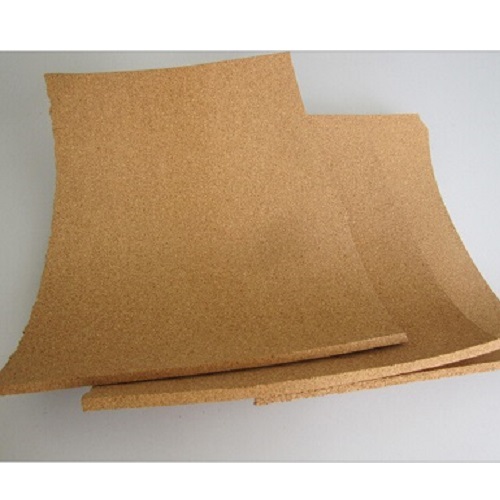
Table of Contents
1. What Makes the Natural Cellular Structure of Cork Unique?
2. How Does Cork’s Microstructure Improve Mechanical Sealing Performance?
3. What Technical Parameters Define High-Performance Cork Rubber Sheet?
4. Why Is Cork Rubber Sheet Ideal for Long-Term Industrial Applications?
5. Conclusion
6. FAQ
What Makes the Natural Cellular Structure of Cork Unique?
To understand how Cork Rubber Sheet achieves superior sealing performance, we must begin with cork itself. Cork is harvested from the bark of cork oak trees and is composed of approximately 40 million cells per cubic centimeter. These cells are polyhedral in shape and filled with air-like gases, creating a naturally lightweight yet elastic structure.
The uniqueness of cork lies in several inherent structural characteristics:
- Closed-cell architecture preventing fluid penetration
- High compressibility with controlled recovery
- Excellent dimensional stability under pressure
- Low density with high energy absorption capacity
- Resistance to aging and fatigue under cyclic loads
When we combine cork granules with nitrile rubber, neoprene, or other elastomers in our Cork Rubber Sheet production process, we effectively reinforce this cellular matrix. The rubber component enhances tensile strength and chemical resistance, while cork maintains compressibility and rebound characteristics.
At Ningbo Kaxite Sealing Materials Co., Ltd., our factory carefully controls particle size distribution, binder ratio, and vulcanization parameters. This ensures uniform density and predictable compression behavior. Because sealing failure often occurs due to uneven surface contact, the natural compressive adaptability of cork becomes a major advantage. As pressure is applied, cork cells compress gradually, filling microscopic irregularities in flange surfaces without over-stressing the gasket.
Another important aspect is resilience. Unlike fully synthetic materials that may experience permanent deformation under sustained loads, cork’s natural memory effect allows partial recovery even after long-term compression. This property helps maintain sealing stress over time, reducing leakage risks.
The cellular walls of cork also contain suberin, a waxy substance that enhances resistance to moisture and many oils. When integrated into Cork Rubber Sheet, this natural barrier effect complements the rubber matrix, improving overall fluid resistance in moderate pressure systems.
From a structural engineering perspective, cork functions as a micro-spring system. Instead of relying solely on rubber elasticity, the sheet benefits from millions of tiny compressible chambers. This distributed stress absorption mechanism minimizes localized stress concentration, which is one of the primary causes of gasket blowout.
Our production experience at Kaxite Sealing shows that optimizing cork granule grading significantly improves sealing consistency. Larger granules increase compressibility, while smaller granules improve surface finish and density. Through precise blending, our factory ensures balanced performance tailored to application requirements.
How Does Cork’s Microstructure Improve Mechanical Sealing Performance?
Sealing effectiveness depends on three key mechanical factors: compressibility, recovery, and load retention. The natural structure of cork directly enhances each of these parameters when formulated into Cork Rubber Sheet.
1. Controlled Compressibility
Cork’s closed-cell network compresses progressively under load. This allows:
- Adaptation to flange surface roughness
- Uniform contact stress distribution
- Reduced bolt torque requirements
- Lower risk of flange distortion
In our Cork Rubber Sheet formulations, compressibility typically ranges from 25 percent to 45 percent under specified loads, depending on grade. This range ensures sufficient deformation to create a tight seal without excessive creep.
2. Superior Recovery Characteristics
Recovery rate determines whether a gasket maintains sealing stress after pressure fluctuations. The elastic memory of cork cells provides rebound capability even after repeated compression cycles.
- Compression set typically below 15 percent
- Maintains sealing force under thermal cycling
- Improves long-term dimensional stability
At Kaxite Sealing, our factory conducts compression set testing under ASTM standards to validate long-term performance.
3. Vibration and Shock Absorption
Industrial machinery often generates vibration, which can loosen conventional gaskets. Cork’s cellular matrix absorbs mechanical energy, acting as a damping layer. This characteristic is particularly valuable in automotive engine covers, oil pans, and compressors.
4. Stress Relaxation Resistance
Stress relaxation can lead to gasket failure over time. The natural spring-like behavior of cork cells distributes internal stress, reducing relaxation rate compared to homogeneous rubber sheets. Because of these mechanical benefits, Cork Rubber Sheet produced by Ningbo Kaxite Sealing Materials Co., Ltd. remains widely used in sealing systems requiring moderate pressure resistance combined with vibration damping.
What Technical Parameters Define High-Performance Cork Rubber Sheet?
Material selection requires measurable data. Below are the typical technical parameters of our Cork Rubber Sheet products manufactured by Ningbo Kaxite Sealing Materials Co., Ltd.
| Property | Standard Range | Test Method |
| Density | 0.8 to 1.2 g per cm3 | ASTM D297 |
| Tensile Strength | 1.0 to 3.0 MPa | ASTM D412 |
| Compressibility | 25 to 45 percent | ASTM F36 |
| Recovery | Minimum 70 percent | ASTM F36 |
| Temperature Range | Minus 30 to 120 degrees Celsius | Internal Standard |
| Thickness | 1 mm to 25 mm | Production Control |
In addition to these standard parameters, our factory offers customized formulations for oil resistance, fuel compatibility, and transformer applications. We provide sheet sizes up to 1500 mm by 1500 mm, and rolls depending on thickness.
Our engineers at Ningbo Kaxite Sealing Materials Co., Ltd. adjust rubber type and cork ratio to meet specific sealing environments. Higher nitrile content improves oil resistance, while increased cork percentage enhances compressibility.
Quality control procedures include density uniformity checks, hardness testing, and aging simulation. Because consistent microstructure is critical, our production line maintains strict mixing ratios and curing temperature controls.
Why Is Cork Rubber Sheet Ideal for Long-Term Industrial Applications?
Long-term sealing performance depends on material stability under mechanical, thermal, and chemical stress. The natural structure of cork provides multiple advantages that contribute to durability.
- Maintains sealing under cyclic loading
- Reduces flange wear due to lower torque requirements
- Resists moderate oils and fuels
- Absorbs vibration and mechanical shock
- Minimizes leakage risks over extended service periods
Cork Rubber Sheet is commonly used in:
- Automotive oil pan gaskets
- Valve cover gaskets
- Transformer sealing pads
- Low-pressure pump housings
- Marine engine components
At Ningbo Kaxite Sealing Materials Co., Ltd., our factory supplies global OEM clients who require stable and predictable performance. Because sealing reliability directly impacts maintenance costs, selecting Cork Rubber Sheet becomes a cost-effective long-term decision.
We continuously improve formulation technology to enhance fatigue resistance and dimensional stability. Through controlled vulcanization and strict raw material selection, our Cork Rubber Sheet ensures consistent mechanical behavior batch after batch.
Conclusion
How Does the Natural Structure of Cork Enhance the Sealing Ability of Cork Rubber Sheet? The answer lies in its closed-cell microstructure, natural elasticity, and stress distribution capability. When combined with engineered rubber compounds, cork transforms into a high-performance sealing material that balances compressibility, recovery, and durability.
At Ningbo Kaxite Sealing Materials Co., Ltd., we leverage decades of production expertise to optimize this natural advantage. From raw material selection to final quality inspection, our factory ensures that every Cork Rubber Sheet meets strict performance standards. If you are seeking reliable sealing materials that deliver long-term value, contact our team today to request samples, technical data sheets, or customized solutions tailored to your application requirements.
FAQ
Q1: How Does the Natural Structure of Cork Enhance the Sealing Ability of Cork Rubber Sheet in high vibration environments?
The closed-cell structure absorbs mechanical energy and distributes stress evenly across the sealing surface. This reduces gasket loosening and maintains sealing pressure even under continuous vibration.
Q2: How Does the Natural Structure of Cork Enhance the Sealing Ability of Cork Rubber Sheet compared to pure rubber sheets?
Unlike pure rubber, cork contains millions of compressible cells that adapt to micro-irregularities in flange surfaces. This improves conformability while reducing excessive bolt torque and stress concentration.
Q3: How Does the Natural Structure of Cork Enhance the Sealing Ability of Cork Rubber Sheet under thermal cycling?
Cork’s elastic memory allows partial recovery after compression and temperature fluctuations. This helps maintain consistent sealing force and reduces leakage risks caused by expansion and contraction.
Q4: How Does the Natural Structure of Cork Enhance the Sealing Ability of Cork Rubber Sheet in oil contact applications?
Cork contains suberin, which naturally resists moisture and moderate oils. When combined with oil-resistant rubber compounds, the sheet provides stable performance in automotive and machinery environments.
Q5: How Does the Natural Structure of Cork Enhance the Sealing Ability of Cork Rubber Sheet for long-term industrial use?
Its micro-spring cellular system distributes load evenly and minimizes compression set. This structural stability extends service life, reduces maintenance frequency, and ensures reliable sealing over extended periods.